
Arthritis Relief in Oceanside, CA
Arthritis in Oceanside often shows up as a stiff neck in the morning, a grinding feeling when you turn your head, or a low back that takes a while to loosen up. If you've been told your X-ray shows wear and tear and there's nothing left to do but manage the pain, it's worth a second look. At Atlas in Balance, Dr. Caitlin Walker looks at how your spine carries your head and body, since imbalance at the top of the neck can load worn joints unevenly further down.
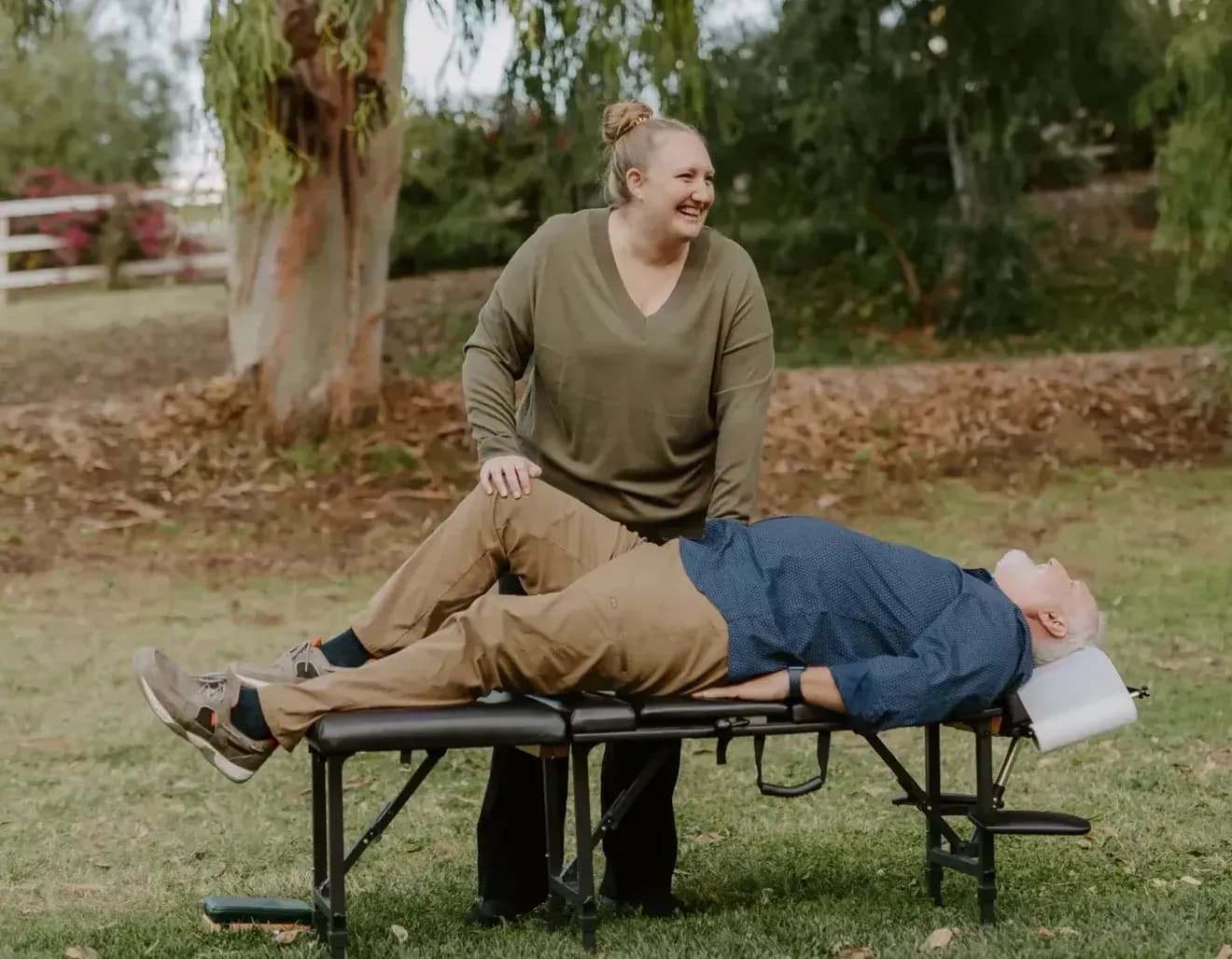
Gentle on stiff joints
Arthritic joints don't need to be forced. They need to move well and carry weight evenly, and that starts at the top of the spine.
What's really happening
How arthritis affects the spine
Osteoarthritis is the gradual wear of the cartilage that cushions your joints. In the spine it often shows up in the small facet joints and discs of the neck and low back, sometimes with bone spurs that narrow the space nerves travel through. When the top of your spine sits off-balance, the joints below can take on uneven load, and that uneven wear may add to stiffness and pain. Arthritis on imaging doesn't always match how much something hurts, which is why the exam matters as much as the picture.
The Blair difference
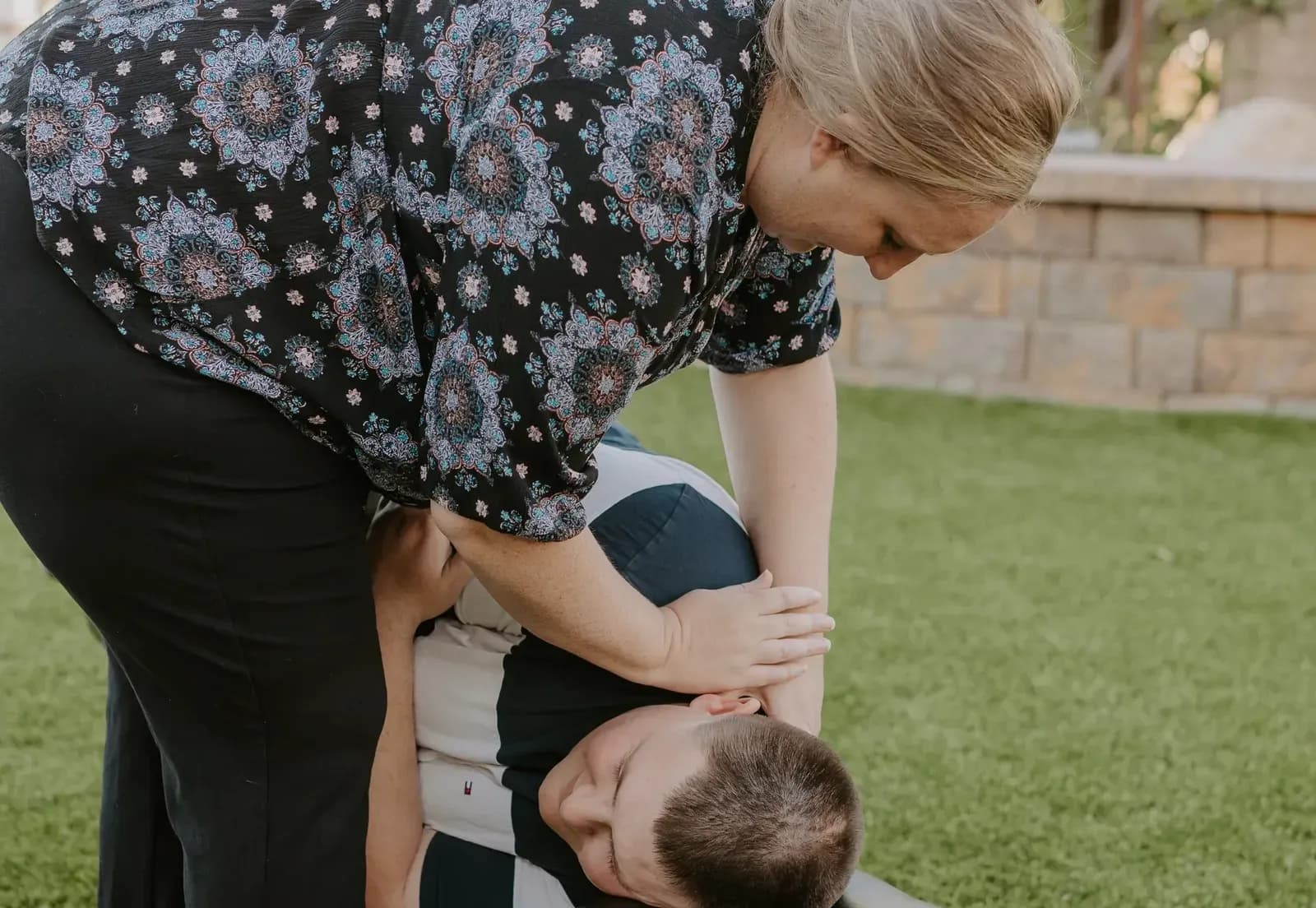
No forceful twisting of arthritic joints
Many people with arthritis are understandably wary of a chiropractor twisting or cracking their neck. Blair upper cervical care uses a light, specific correction at the top of the spine, with no rotation or cracking. By helping your head sit balanced over your spine, the aim is to ease uneven load on worn joints further down and help you move with less stiffness.
Your arthritis exam
What we check when joints are stiff and sore
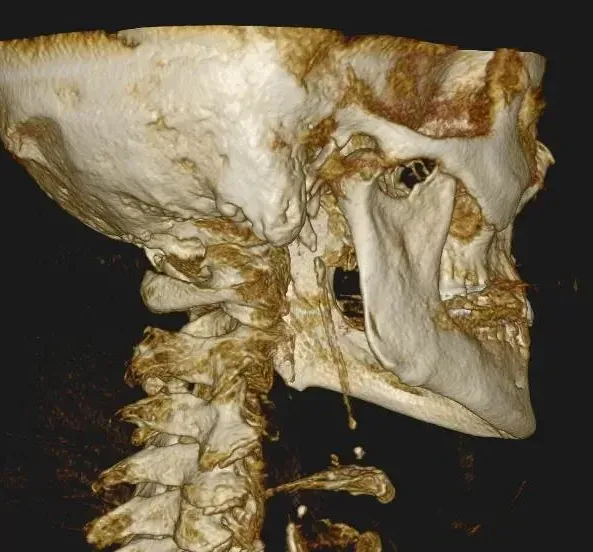
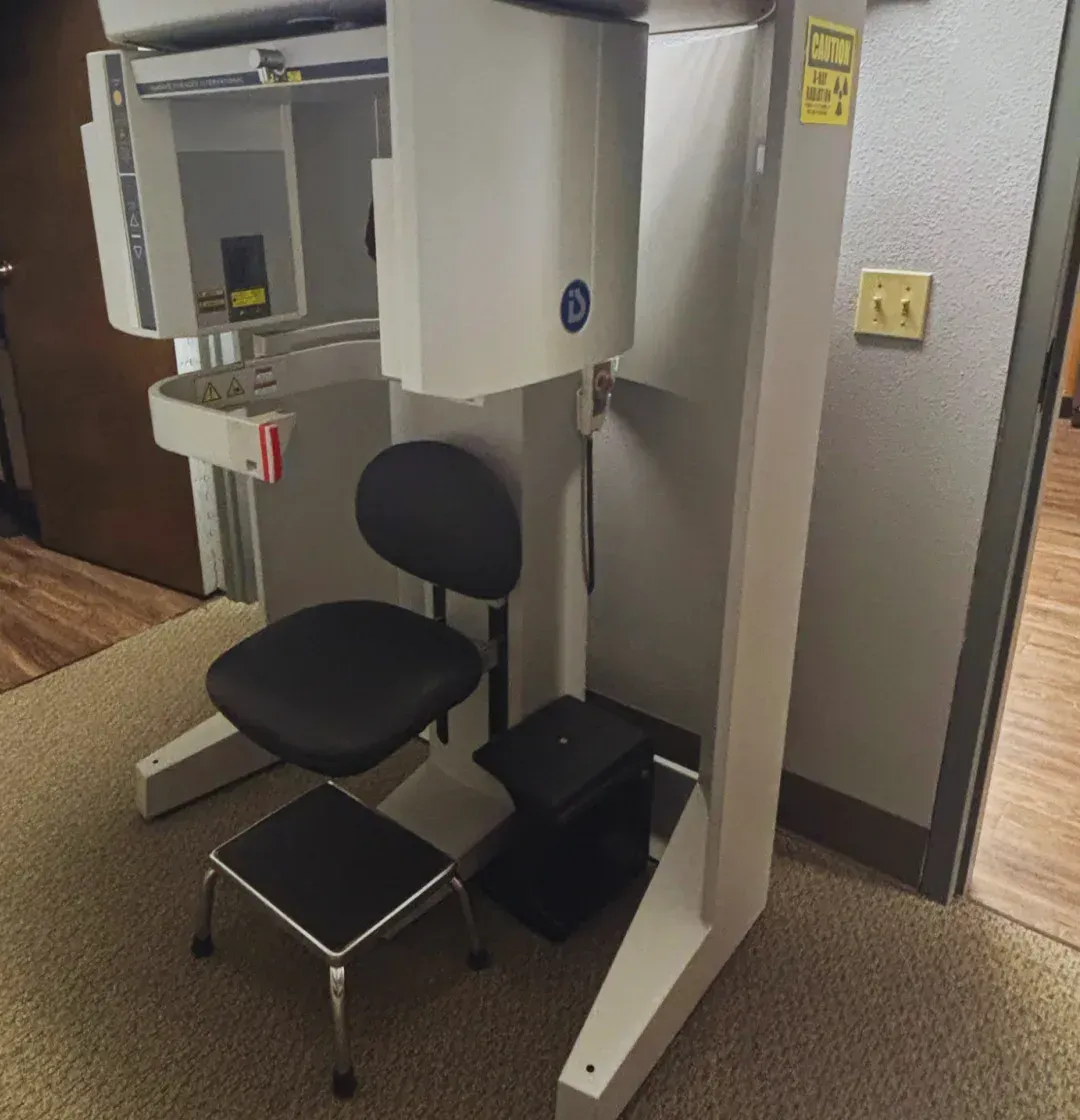
Arthritis care starts with knowing which joints are involved and what kind of arthritis you have. At your first Oceanside visit, Dr. Walker examines how your neck and back move and where the pain is coming from. When your exam calls for it, CBCT imaging shows the bony detail of the upper neck, including joint spacing and arthritic changes. If the findings suggest an inflammatory type of arthritis, we'll refer you to your doctor or a rheumatologist.
- Which joints are stiff or painful, and whether it's worse in the morning, after rest, or after activity
- How long morning stiffness lasts, since stiffness of an hour or more can point to inflammatory arthritis
- Neck and back range of motion, posture, and how evenly your weight is carried
- Signs of nerve involvement, like numbness, tingling, or weakness in the arms or legs
- Bone health factors, such as osteoporosis or long-term steroid use, that change how we care for you
- Previous imaging, injuries, surgeries, and what you've already tried
Beyond the spine
Arthritis in hips, knees, and shoulders
Arthritis rarely stays in one place. For hips, knees, shoulders, and other joints, care may include gentle extremity adjusting or SoftWave therapy, a non-invasive acoustic wave treatment offered at our Oceanside office. Dr. Walker will tell you whether either is a good fit for your joints after your exam.

Safety first
When to see a medical doctor first for joint pain
Arthritis is common, but some joint symptoms point to conditions that need medical care before chiropractic care. See your doctor first for any of the following, and go to an emergency room for loss of bladder or bowel control or a hot, swollen joint with fever.
- A hot, red, swollen joint, especially with a fever
- Pain and swelling in several joints on both sides of the body, or morning stiffness that lasts more than an hour
- New weakness, numbness, or clumsiness in the arms or legs, or trouble with balance or walking
- Loss of bladder or bowel control, or numbness around the groin
- Joint pain after a fall or injury, especially if you have osteoporosis
- Unexplained weight loss, fever, or night pain that doesn't ease with rest
Our approach
Care that starts at the top of your spine
Many stubborn symptoms trace back to the top two bones of your neck, where your spine meets your skull. Dr. Caitlin Walker uses the Blair upper cervical technique, guided by CBCT imaging, to find and gently correct misalignments there, and she assesses the whole cervical spine rather than those two bones alone. No twisting, no cracking, just a precise, low-force correction matched to your anatomy.

What your first visit looks like
Your first visit is about understanding, not rushing to adjust. You'll leave knowing what we found, what we recommend, and why, explained in plain language.
- A conversation about your health history and goals
- A thorough neurological and orthopedic exam
- CBCT imaging when it's indicated, so care is based on your real anatomy
- A clear, personalized care plan

Your journey to better health starts here
- 1.
Before your visit
Book your appointment and complete our intake forms so we understand your health history and goals.
- 2.
Your first visit
A thorough neurological and orthopedic exam of your neck with objective testing that measures your range of motion, proprioception, and sensorimotor control, plus a thermography scan, posture analysis, and CBCT imaging to map your care plan.
- 3.
Your care plan
Adjustments tailored to your specific needs, with gentle, precise corrections built around you, plus our massage chairs to help you relax before and after.
- 4.
Ongoing support
Consistent care that helps your body maintain progress and sustain long-term health, with the massage chairs open to you at every visit.

See it in action
Real relief, in their words
“Dr Caitlin and her staff are amazing! I highly recommend going in to get an initial exam with scans and set up additional appointments to “get your head on straight.””

Your chiropractor
Dr. Caitlin Walker, DC
Doctor of Chiropractic and Oceanside native, specializing in Blair Upper Cervical Chiropractic with CBCT-guided precision. Certified Athletic Trainer and AVCA-certified Animal Chiropractor.
Meet Dr. WalkerGood to know
Frequently asked questions
- Can a chiropractor help with arthritis?
- Chiropractic care can't reverse arthritis, but gentle care may help some people move more easily and feel less stiff, especially with osteoarthritis in the neck and back. Your exam shows whether you're likely to benefit.
- Is chiropractic care safe if I have arthritis in my neck?
- Blair upper cervical care uses a light, precise correction with no twisting or cracking of the neck, which is one reason many people with neck arthritis choose it. Dr. Walker screens for bone health concerns and nerve signs before recommending any care.
- Do you treat rheumatoid arthritis?
- Rheumatoid arthritis and other inflammatory types need care from a rheumatologist. If you have one of those conditions, our care works alongside your medical treatment, not in place of it, and we adapt our approach to your joints.
- Do I need new imaging?
- Bring any X-rays or MRIs you already have. When your exam calls for it, CBCT imaging at our office shows the bony detail of the upper neck, so we can see arthritic changes and alignment before any correction.
- What about arthritis in my knees or hips?
- Care for hips, knees, and other joints may include gentle extremity adjusting or SoftWave therapy. Dr. Walker will tell you whether either is a good fit after your exam.
- How many visits will I need for arthritis relief?
- Arthritis is a long-term condition, so the goal is better movement and fewer flare-ups rather than a quick fix. Most people need a series of visits at first, then less frequent care to maintain progress.
- Should I keep exercising with arthritis?
- Usually, yes. Regular, gentle movement is one of the best-supported ways to manage osteoarthritis. Dr. Walker can talk through which activities suit your joints.
New here?
General questions
- Is upper cervical chiropractic different from a regular adjustment?
- Yes. Upper cervical care starts at the top two bones of the spine, the atlas (C1) and axis (C2), using precise, low-force corrections guided by imaging. It isn't limited to those two bones, though: Dr. Walker examines and cares for the whole cervical spine, since the rest of your neck affects how well a correction holds. There's no twisting, cracking, or popping, and every adjustment is tailored to your exact anatomy.
- Do adjustments hurt?
- No. Blair corrections use a light, specific contact, so most people feel gentle pressure and nothing more. Many patients are surprised by how calm the experience is, especially if traditional adjusting has made them nervous before.
- What happens at my first visit?
- Your first visit includes a conversation about your health history, a thorough neurological and orthopedic exam, and CBCT imaging when it's indicated. Dr. Walker then explains what she found and recommends a plan in plain language, with no pressure and no rush.
Learn more
Related articles
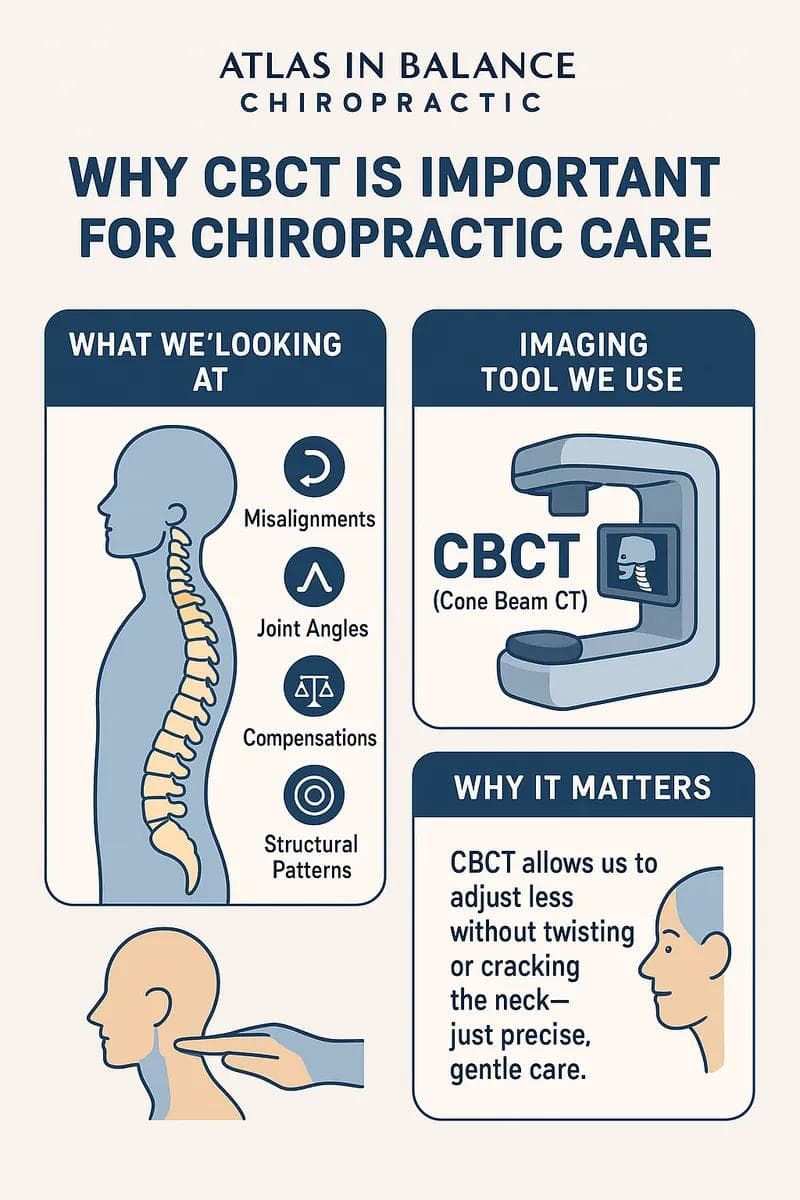
Precision in Practice: Why Blair Upper Cervical Imaging Looks at the Entire Neck
Blair upper cervical imaging maps your neck in 3D so each adjustment fits your exact anatomy. Here's why precise imaging is the foundation of gentle, effective care.
Read more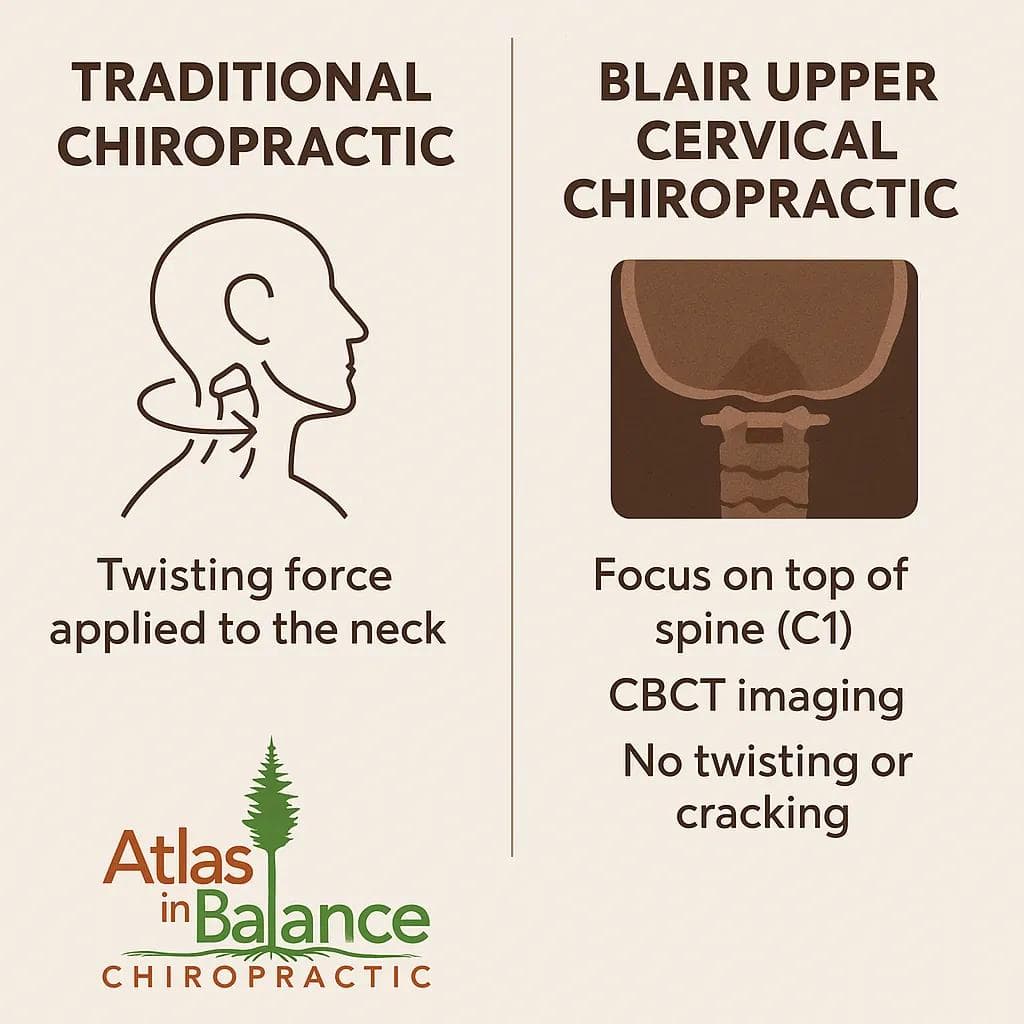
What Is Blair Upper Cervical Chiropractic—and How Is It Different from Traditional Chiropractic?
Blair upper cervical chiropractic corrects the top of the spine gently and precisely — no twisting or cracking. Here's how it differs from traditional adjusting, and why that matters.
Read more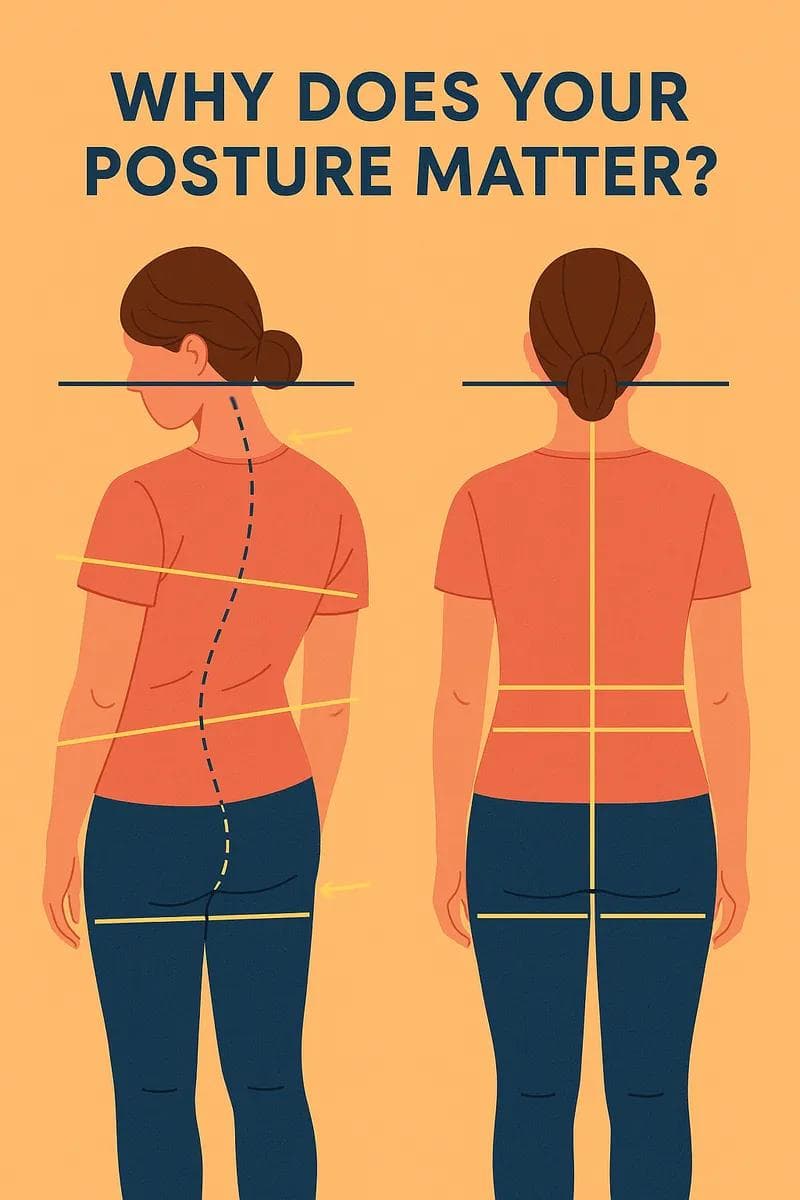
How Your Posture and the Righting Reflex Shape Your Whole Body
Your body fights to keep your eyes level — a survival instinct called the righting reflex. When the upper neck is misaligned, that reflex can pull your whole posture out of balance.
Read more
New patients welcome
Ready to feel your best?
Book your visit, and we'll help you take the first step toward gentle, precise upper cervical care in Oceanside.