How Your Posture and the Righting Reflex Shape Your Whole Body

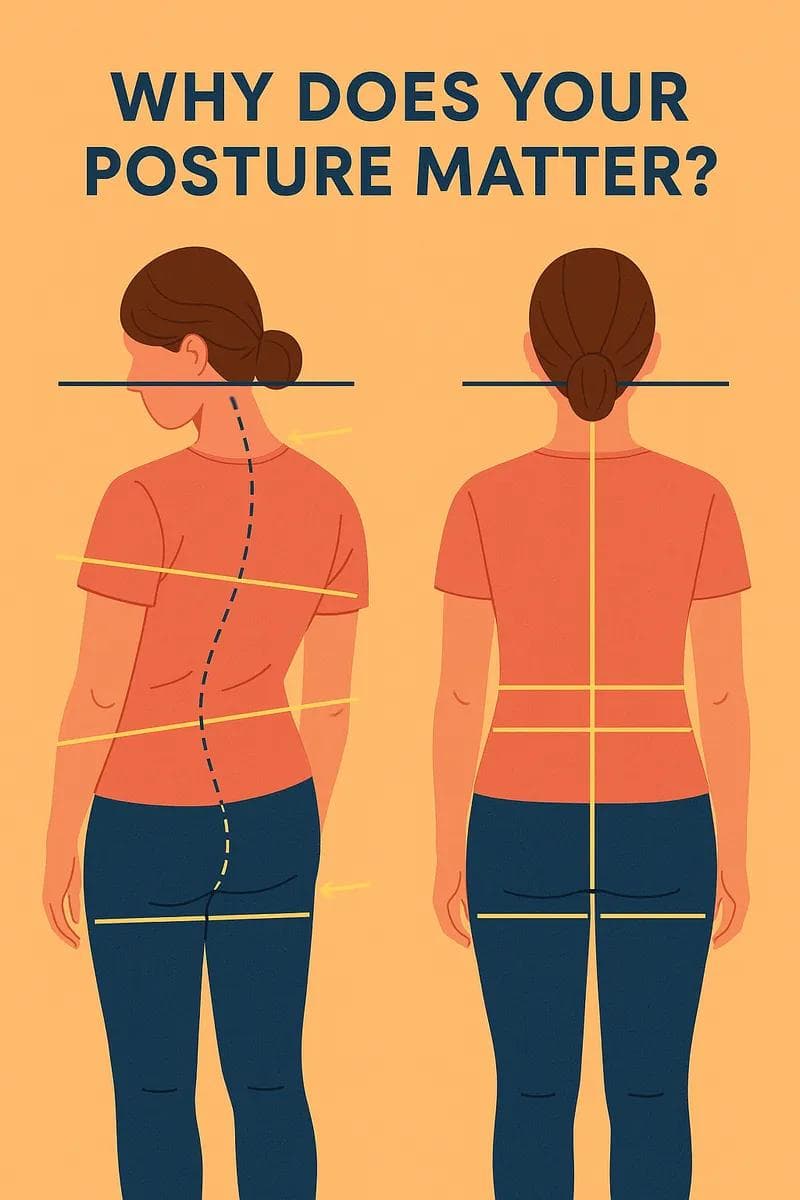
As a chiropractor I have found that one of the most powerful—and often overlooked—factors that affects your health is your posture. Not just how you sit or stand, but how your body is constantly adjusting it parts to keep your head level and eyes on the horizon. That’s the job of your Righting Reflex—a built-in system that starts at the top and impacts the entire body.
When your head and neck are out of alignment, everything below begins to shift and compensate. From your neck all the way to your feet, your body forms a new "normal" in response. Over time, this misalignment can lead to widespread tension, pain, and dysfunction.
What Is the Righting Reflex?
The Righting Reflex is your body’s natural mechanism for keeping your head upright and your eyes level with the horizon. It’s constantly working in the background, making real-time adjustments so you can stay balanced and aware of your surroundings.
But here’s the catch: when your head shifts out of its ideal position—tilted, rotated, or jutting forward—your body doesn’t just ignore it. It compensates downward, through the neck, shoulders, spine, hips, knees, and feet.
The Domino Effect: Head to Toe Compensation
Because your body is determined to keep your eyes level, any shift in head position can cause a domino effect through the rest of the body:
- The neck overworks to hold up the head
- The shoulders round, elevate, and shift
- The thoracic spine (mid-back) stiffens or flattens
- The lower back arches or flattens to compensate
- The pelvis tilts or rotates
- The knees and feet adjust to maintain balance
It’s an incredible system of adaptation—but it comes at a cost.
Common Symptoms from Postural Compensation
Over time, these adaptations can show up as:
- Chronic neck and back pain
- Headaches and TMJ dysfunction
- Shoulder tension or frozen shoulder
- Hip or knee issues due to altered gait
- Low back and sciatic nerve pain
- Decreased lung capacity from collapsed posture
- Fatigue from muscles working overtime to hold you up
Your body isn’t failing—it’s trying to survive. But the longer it compensates, the more likely these symptoms will show up and stick around.
Chiropractic’s Role: Rebalancing from the Top Down
As chiropractors, we don’t just focus on the site of pain—we look at how your body is adapting. And often, that means looking at what’s happening at the head and neck first.
When we realign the spine and correct posture—especially at the top—it helps reset the entire system. Muscles begin to relax and can help to unwind the spine. The nervous system functions more efficiently. And the body doesn’t have to fight to keep your head upright and on straight.
That’s when real healing begins.
Supporting Your Posture Every Day
Want to help your body maintain better alignment outside the office? Start with these:
- Be aware of forward head posture—especially while using screens
- Set up an ergonomic workspace that keeps your head body in a neutral position
- Incorporate posture exercises and movement breaks into your routine-be sure to ask us more about the exercises you can do at your next appointment
- Get regular chiropractic adjustments to get your head on straight and keep your spine aligned
Final Thoughts
Your posture is a reflection of how your body is functioning. When the Righting Reflex kicks in to keep your head level, it can trigger a full-body cascade—from your eyes to your toes.
That’s why true wellness starts at the top. If you’ve been chasing symptoms without relief, it might be time to look at the bigger picture—and start rebalancing from the head down. As we say here at Atlas in Balance Chiropractic, "Let's get your head on straight" and your body will follow!
From your friendly neighborhood chiropractor,
Caitlin Walker DC cAVCA MAT ATC